
 Call Us
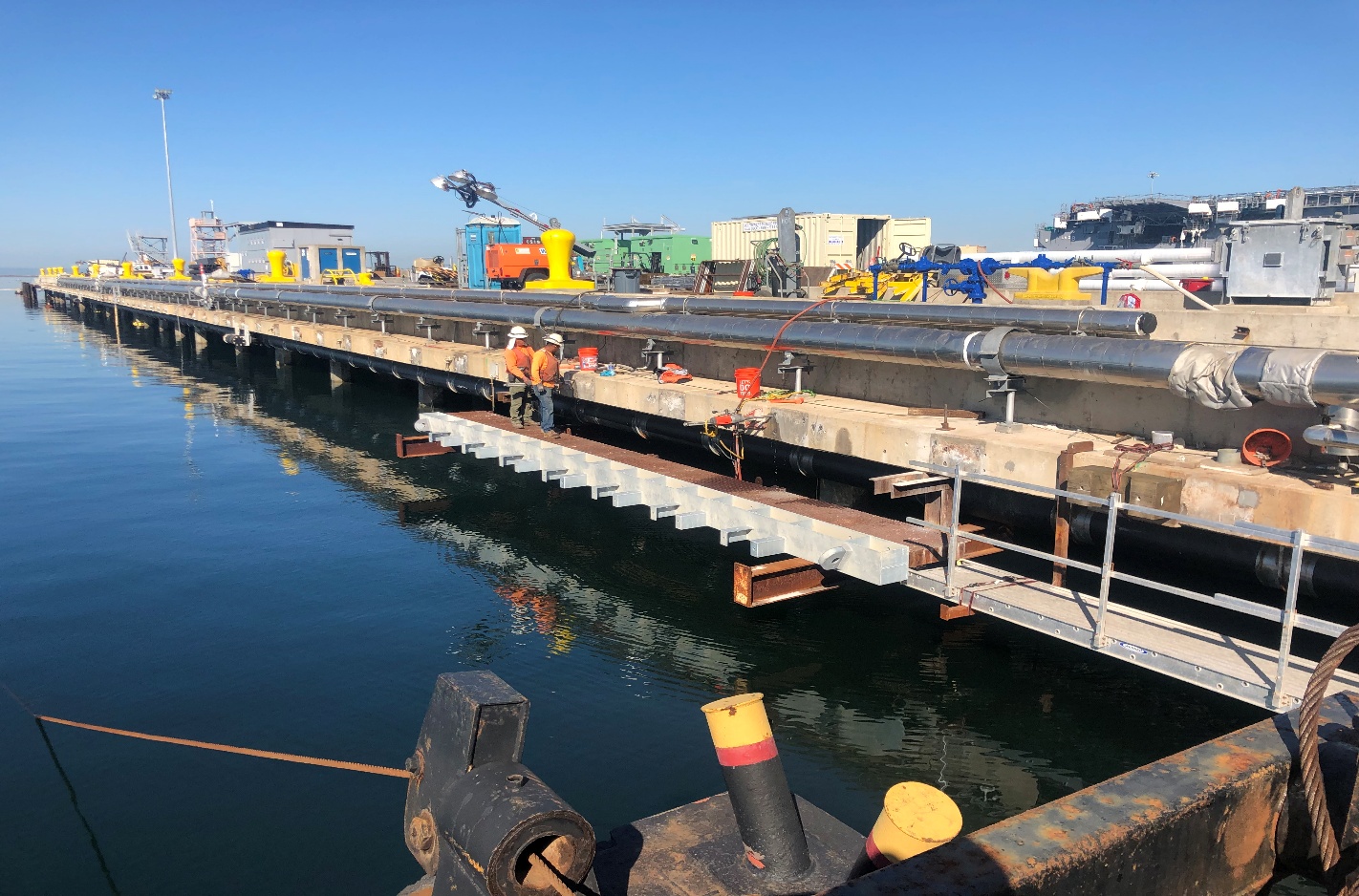
An aging pier can look serviceable from the deck. The real story is usually underneath it. Deciding whether to repair, retrofit, or replace a pier or wharf comes down to three things: how much load-carrying capacity the structure has lost, how many years of service life remain, and what the facility needs to do over the next 30 to 50 years. A formal condition assessment that combines above-water and underwater inspection gives owners the data to make that call on evidence rather than guesswork.
Much of the waterfront around San Diego Bay was built decades ago for smaller vessels, lighter loads, and older seismic codes, and saltwater has been working on its concrete, steel, and timber every day since. For Navy facility managers, port operators, and municipal public works teams, the question is rarely whether a structure needs attention. It is how much work is justified, and when.
At Marathon Construction, we have worked on that question from the contractor’s side for 42 years, much of it under active piers at Naval Base San Diego. The engineer defines what a structure must carry. The contractor works out how to deliver it in a working harbor. This article covers both sides: how waterfront structures deteriorate, how condition assessments work, how repair, retrofit, and replacement differ in the field, and the permitting and operational details that shape the final decision.
Why Piers and Wharves Wear Out Faster Than Land-Based Structures
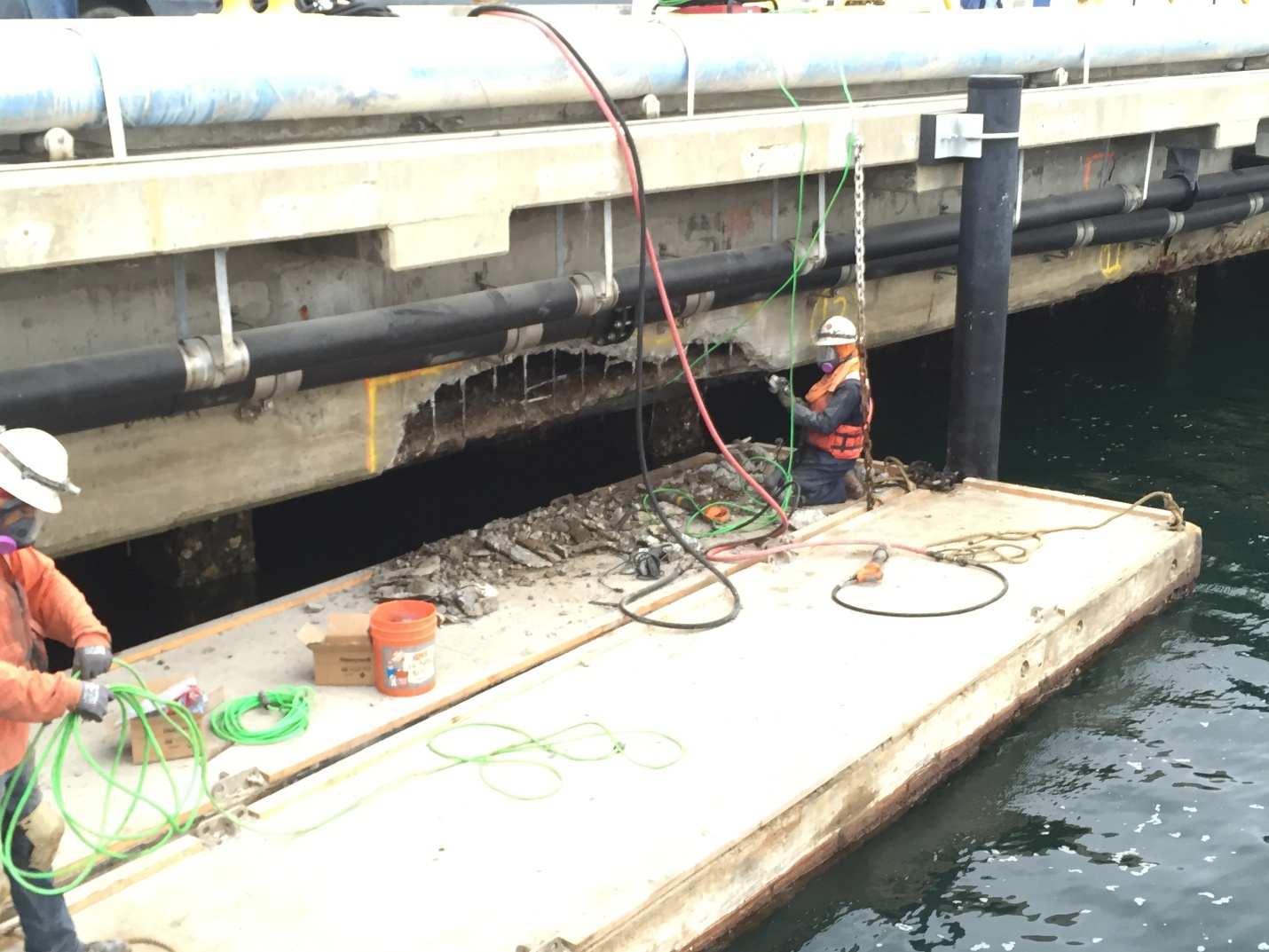
Chloride-induced corrosion is the leading cause of decline in concrete piers. Salt from seawater works its way into the concrete until it reaches the reinforcing steel. The steel rusts and expands, cracking the concrete around it until pieces break loose. This is called spalling, and on older piers around San Diego Bay it is the most common repair item we see.
The damage is not spread evenly. The splash zone, the band of a pile between low tide and the reach of wave spray, goes through constant wet-dry cycles with plenty of oxygen and chlorides, so deterioration concentrates just above and below the waterline rather than at the mudline. It is also the hardest zone to work in, because access depends on the tide. On our Repair of Pier 1 project at Naval Base San Diego, much of the work was performed under the deck, and crew schedules and access equipment were planned around tidal swings.
Timber structures have their own problem. Marine borers such as shipworms and gribbles tunnel through untreated or poorly treated wood, sometimes hollowing a pile from the inside while the outside still looks sound. Vessel impact and abrasion add wear at fender systems, pile caps, and deck edges, and when fenders are worn or missing, berthing loads go straight into the structure itself.
Then there are changing demands. A wharf designed in the 1960s may now be asked to carry heavier cranes, larger trucks, or bigger vessels with deeper drafts and larger mooring loads. Seismic design standards for piers and wharves have also changed a great deal. A structure can be in fair physical condition and still fall short of what the facility needs today.
How a Waterfront Condition Assessment Works
Every sound rehabilitation decision starts with a condition assessment. The industry reference for this work is the American Society of Civil Engineers’ Manual of Practice (MOP) 130, Waterfront Facilities Inspection and Assessment, which ASCE released in a second edition in 2025. It sets out how inspections are scoped, how deep they go, and how findings are rated.
Above-Water and Underwater Inspection Levels
Above-water inspection covers the deck, pile caps, beams, utilities, fenders, and mooring hardware. Underwater inspection is where most of the hidden damage turns up, and engineer-divers typically perform it at three levels of effort.
Level I is a visual and hands-on swim-by of all underwater elements. It is meant to catch obvious problems such as missing piles, major section loss, or large cracks.
Level II removes marine growth from a sample of elements, commonly around 10 percent, at set locations such as the mudline, mid-water, and just below low water. This exposes surface damage that growth would otherwise hide.
Level III adds testing on a smaller sample, often around 5 percent of elements, including ultrasonic thickness readings on steel piles, cores from timber piles, and concrete cores for chloride testing. This level gives engineers the hard numbers needed to calculate remaining capacity.
Turning Inspection Data Into a Rating
Inspection findings are rolled into a condition rating for each element and for the facility as a whole. Ratings run from good to critical and map directly to recommended actions, from routine monitoring to load restrictions or closure. Paired with a structural analysis, they show what the structure can safely carry today, and for how long.
This is the step owners are most tempted to shorten, and from where we stand it is the one that most affects cost later. A bid package based on a Level I swim-by alone usually undercounts the piles that need work, and the gap shows up during construction as change orders. On Pier 6 at Naval Base San Diego, Marathon delivered the work for NAVFAC Southwest as a design-build contractor. We performed the existing condition survey and design ourselves, then built the roughly 1,200 cubic feet of concrete repairs to piling, utility trenches, and pile caps that the survey called for. When the people who inspect a structure also have to build the repair, the scope tends to be realistic.
Repair, Retrofit, or Replace: The Three Paths
Targeted Repair
Repair restores damaged elements to their original capacity without changing how the structure works. It is the right choice when damage is localized and the structure still meets current operational needs.
Most pier repair work in Southern California relies on three methods. Concrete spall repair removes damaged concrete, cleans or replaces corroded reinforcing steel, and rebuilds the section with marine-grade repair material. Pile jackets place a fiberglass or fabric form around a damaged pile and fill it with grout or epoxy, restoring section and sealing the pile from further seawater exposure, usually without removing the deck above. Cathodic protection, using sacrificial anodes or an impressed-current system, stops the steel from corroding. Adding cathodic protection at the same time as concrete repairs keeps new corrosion from forming right next to the patched areas.
This is work our crews have done across San Diego Bay for years. On Pier 2 at Naval Base San Diego, we repaired 164 concrete piles, more than 7,000 square feet of underdeck concrete, and more than 9,000 square feet of top deck while the pier remained in operation. On Pier 7, the work included replacing spalled and delaminated concrete and reinforcing steel on pile caps, around utility enclosures, and on the underdeck, along with damaged fender rub strips. Our marine construction project list shows the full range of repair work completed for Navy and port clients.
Structural Retrofit
A retrofit upgrades a structure beyond its original design. Owners choose this path when the structure is sound enough to keep but no longer meets current demands. Typical retrofits include adding piles to increase load capacity, strengthening pile-to-deck connections to improve seismic performance, replacing fender systems to handle larger vessels, and raising deck elevations to account for future sea level rise. California’s state sea level rise guidance is now a routine part of design discussions for any waterfront asset expected to last several more decades.
Retrofits are often the most demanding path to build, because new work has to tie into old work whose true condition is only fully known once it is exposed. Good assessment data and a contractor prepared to adjust in the field keep those surprises manageable.
Full Replacement
Replacement makes sense when repair costs approach the cost of new construction, when a large share of the piles show serious deterioration, or when the facility’s mission has changed so much that the old layout no longer works.
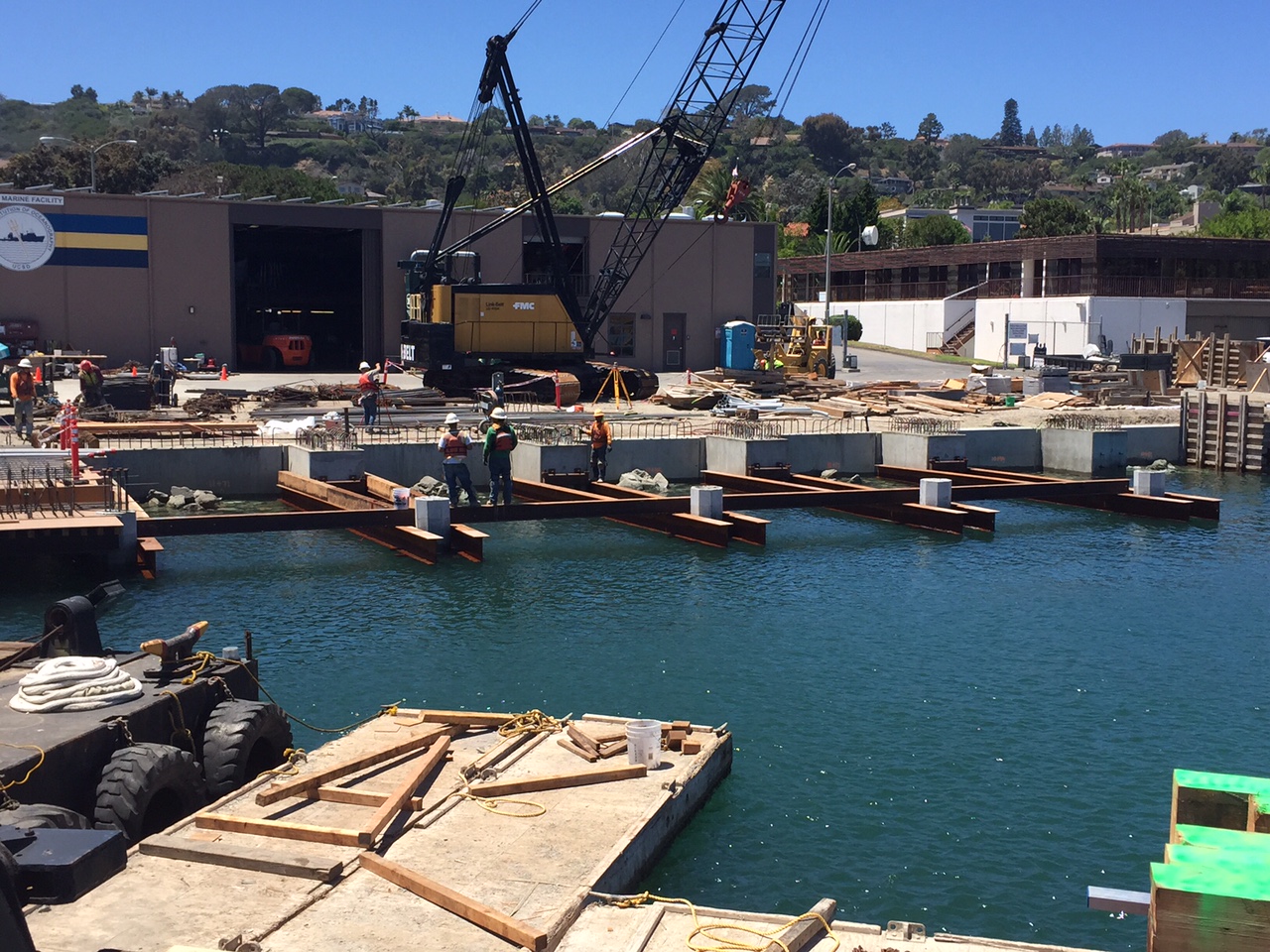
The Nimitz Marine Facility in Point Loma is a good example. The facility is home port for the research fleet of UC San Diego’s Scripps Institution of Oceanography, and its pier and wharf had reached the end of their service life. Before replacement, Scripps reported that crews had gone several years unable to load vessels with the facility’s own cranes. Marathon removed roughly 29,000 square feet of existing pier and wharf and 162 concrete and timber piles, performed about 11,000 cubic yards of dredging and shoreline excavation with upland disposal, and built the new pier and wharf designed by Ben C. Gerwick, Inc. and Triton Engineers. The $15.5 million project was completed in 2016, and the new facility can berth up to seven vessels at a time.
Cost Factors That Shape the Decision
Comparing the three paths on construction cost alone can lead to the wrong answer. A sound comparison looks at the full life cycle of the asset.
Remaining service life comes first. A repair that costs half as much as replacement but only buys 10 years of service may cost more over 50 years than replacing the structure once.
Downtime is often the largest number on the page. For a working port or naval facility, the cost of a closed berth can exceed the construction budget. Repair work can usually be phased around operations, as it was on Pier 2. Full replacement typically requires a longer outage or a temporary berth.
Demolition and disposal are easy to underestimate in early budgets. Older timber piles were commonly treated with creosote, and removing and disposing of them must follow state and federal rules for treated wood. Concrete and steel debris also has to be removed, sorted, and hauled.
Future maintenance rounds out the picture. New structures with modern concrete mixes, coatings, and cathodic protection need less upkeep. Aging structures that have been repaired several times usually need more frequent inspection and more repair cycles.
Building each option out on a life-cycle basis gives decision-makers and funding boards a clear, defensible reason for the path they choose.
Permitting and In-Water Work Controls for Pier Projects
Pier and wharf work in California typically needs approvals from the U.S. Army Corps of Engineers, the Regional Water Quality Control Board, and the California Coastal Commission or the local port’s coastal permit process. Two technical issues tend to drive the conditions attached to those permits, and both land directly on the contractor’s daily operations.
Underwater Noise From Pile Driving
Impact pile driving sends strong sound pressure through the water. Under interim criteria adopted by the Fisheries Hydroacoustic Working Group and used by Caltrans and federal resource agencies, injury thresholds for fish are a peak level of 206 decibels and a cumulative sound exposure level of 187 decibels for fish 2 grams and larger, or 183 decibels for fish under 2 grams. Separate thresholds apply to marine mammals, and Navy pile work in San Diego Bay commonly proceeds under an incidental harassment authorization from NOAA Fisheries.
In the field, crews manage these limits by using vibratory hammers where soil conditions allow, placing cushion blocks between the hammer and the pile, deploying bubble curtains that surround the pile with a wall of air, and monitoring underwater noise during driving. Each of these affects production, so they belong in the schedule from the start.
Eelgrass and Shading Impacts
Eelgrass beds grow in many parts of San Diego Bay and are protected as essential fish habitat. Under the California Eelgrass Mitigation Policy, projects must survey for eelgrass before and after construction and mitigate for any loss. New or wider decks can shade the eelgrass below and are reviewed closely, so replacement designs that use grated decking or a narrower footprint can reduce impacts. Controlling turbidity during in-water work matters here as well, a subject we covered in How Marine Construction Crews Maintain Water Quality During Active Projects.
Keeping the Facility Working During Construction
For most owners, the facility cannot simply close while it is rebuilt. Phased construction divides the structure into sections so part of the berth stays open while crews work on the rest. Berth coordination with port operators or base port operations sets windows for crane barges, material deliveries, and diving work around vessel arrivals and departures. On military installations, crews need badging and escort plans, and work schedules must fit base security protocols. That routine is familiar to our crews, who have worked at Naval Base San Diego, Naval Base Point Loma, and Naval Base Coronado for years.
Sometimes there is no time to plan. In December 2019, a section of the Chollas Creek quaywall at Naval Base San Diego failed and fell into the creek. Marathon mobilized immediately to stabilize the shoreline and protect surrounding facilities, and the Emergency Chollas Creek Quaywall Repair went on to include removal of the failed wall and a new sheet pile wall with revetment. A response like that depends on having equipment, materials, and experienced crews close by and ready to go.
Common Mistakes in Waterfront Rehabilitation Projects
Most of the problems we see on rehabilitation projects trace back to decisions made before a contractor is on site.
The most common is bidding from limited inspection data. When a repair package is built on a swim-by alone, divers routinely find more damaged piles than the quantities show, and the overrun becomes a change order. Level II and Level III inspection before design is almost always cheaper than paying for the unknowns during construction.
The second is patching concrete without stopping corrosion. Repairing spalls while chlorides remain in the surrounding concrete often leads to new damage right next to the patches within a few years. Pairing repairs with cathodic protection or other corrosion control extends the life of the work.
The third is designing for the past. Repairing a structure to its original capacity may not be enough if heavier equipment or higher water levels are expected during its remaining life.
The last is treating fenders as an afterthought. A worn fender system passes berthing forces straight into piles and pile caps, and replacing fenders is often one of the most cost-effective ways to protect everything behind them.
Why Waterfront Experience Matters
Choosing between repair, retrofit, and replacement sets the course of a waterfront asset for decades. Getting it right depends on solid inspection data and a contractor who knows how marine structures are built and repaired in active harbors.
Marathon Construction Corporation is a family-owned marine and heavy civil contractor based in Lakeside, with 42 years in business and more than 450 completed projects across the Western United States. Our pier, wharf, quaywall, and bulkhead work around San Diego Bay includes repairs to Piers 1, 2, 6, and 7 at Naval Base San Diego, the emergency Chollas Creek quaywall repair, and the Nimitz Marine Facility replacement for UC San Diego. We bring the same field discipline to every waterfront structure: accurate scoping, careful in-water work, and construction phased to keep facilities running.
To discuss an aging pier, wharf, or seawall, explore our marine construction capabilities, review our project history, or contact Marathon Construction Corporation through our contact page.

 Address
 Email Us
 Contact